

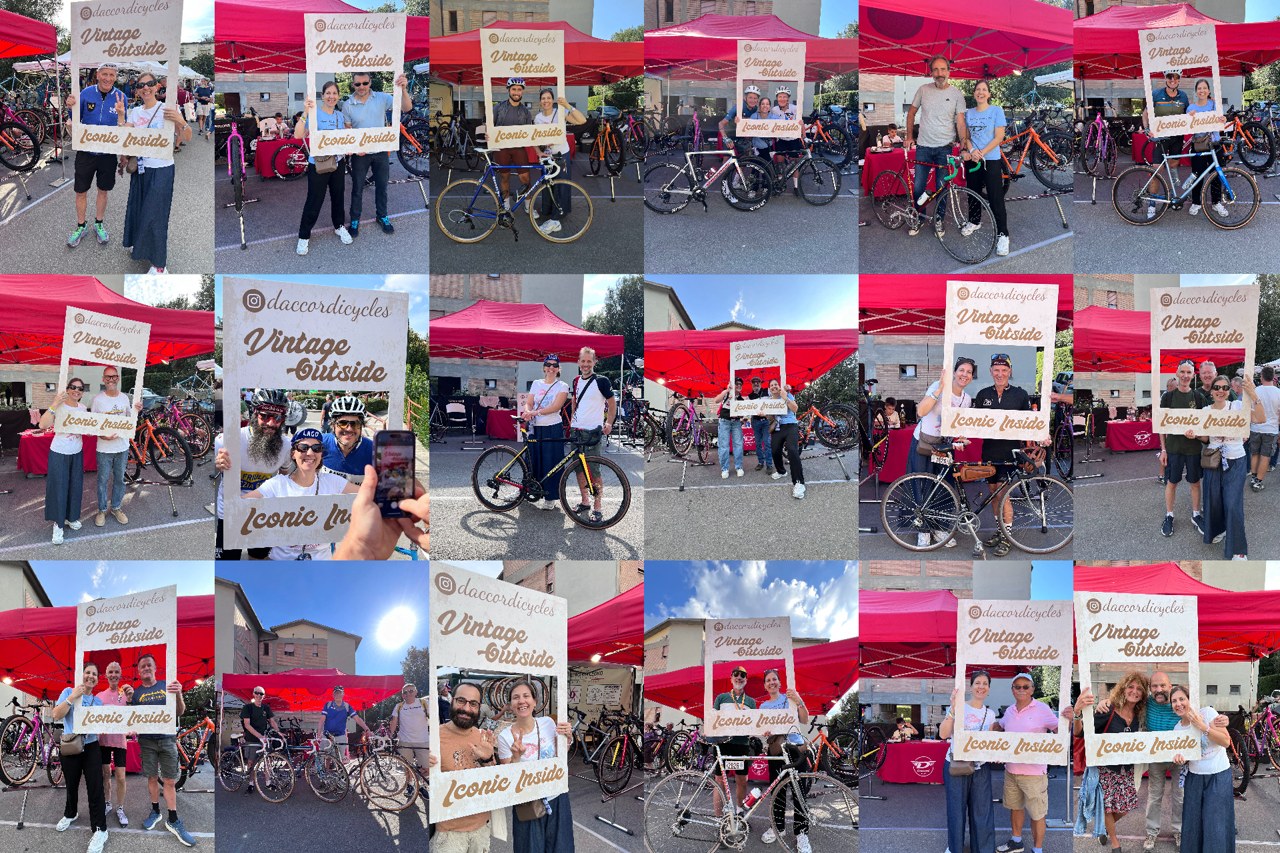
We came back from L’Eroica with many impressions, but above all with the feeling that we had heard something worth sharing.
When we attend events like this, being there is not simply about bringing a few bikes, displaying them and talking about our work. One of the things we value most is the opportunity to meet cyclists and talk to them. Not so much to understand where the bike industry is heading, because we are well aware that a small company like ours does not have the power to determine its direction. The broader trends in the market are largely shaped by the major brands, through investments, communication, sponsorships and production capabilities that are obviously on a completely different scale from ours.
What interests us much more is understanding what cyclists think about the direction in which the industry is taking them. That is why, whenever we attend events, we try to talk to as many people as possible, listen to their experiences and understand what they appreciate and what, on the other hand, is beginning to frustrate them.
This year, at L’Eroica, what we heard surprised us more than usual. Of course, we cannot turn a few days spent in Gaiole into market research, and we are well aware that the L’Eroica crowd has its own particular characteristics. And yet, when people of different ages, backgrounds and levels of experience spontaneously start raising the same issues, it is at least worth stopping to think about them.
Are we still sure that newer means better?
The subject that came up most frequently was the constant succession of innovations, new standards, new components and new technical solutions. Many cyclists told us they were tired of a market in which something that was presented as the height of technology only a short time ago can suddenly seem outdated as soon as a new solution is introduced.
Interestingly, the people we met were not opposed to innovation. Hardly anyone dreams of a cycling world frozen in time, and it would be difficult to deny the many genuine improvements that technological development has brought to our bikes. What seems to have weakened, rather, is the automatic assumption that every new development must necessarily represent progress.
Many of the people we spoke to told us that they increasingly feel some innovations are introduced not only because they make it possible to build a better bicycle, but also because they create a new reason to buy. A standard changes, a component changes, what came before becomes incompatible or simply starts to look old, and the cyclist is once again encouraged to purchase something new.
Working with bicycles every day, we have to admit that we have sometimes had the same feeling ourselves. We handle a wide variety of components and technical solutions and, alongside innovations whose benefits are immediately clear to us, there are others where we find it much harder to identify a tangible advantage for the person who will actually ride the bike.
Perhaps this is what is really changing: not the desire for innovation, but the way cyclists judge it. Instead of simply asking what the newest product is, some cyclists seem to be asking again whether that product is genuinely better for them.
Where, how and by whom is a bicycle made?
A second topic came up far more often than we expected: the origin of the products themselves. Some people told us openly that they are no longer willing, or at least are less inclined, to buy products made in Asian countries where wages, labour protections and environmental regulations differ from those in Europe.
It is important to be precise here. We are not suggesting that manufacturers in Asia fail to comply with the regulations of the countries in which they operate, nor would it make sense to treat very different manufacturing environments as though they were all the same. What we are saying is that these products are made within regulatory frameworks that are not necessarily the same as those governing production in Italy or elsewhere in Europe, and that some cyclists are beginning to take this into account when deciding how to spend their money.
This seems to us to be a relatively new sensitivity, at least in the extent to which we encountered it this year. For a long time, conversations about bicycles focused mainly on weight, performance, technology and price. Today, some people are beginning to ask additional questions: Where was it made? Who made it? Under what rules? What kind of supply chain am I supporting when I buy it?
Of course, we are perfectly aware that extremely high-quality products are made in Asia. So this is not a discussion about technical quality, nor do we want to reduce it to a simplistic opposition between a “good” European product and a “bad” Asian one. What we sensed instead was the emergence of an additional criterion in the purchasing decision, one that we might describe as ethical: for some people, the value of what they buy also depends on where it was made, the people who made it and the production system behind it.
Naturally, this is a way of thinking that resonates with us. Daccordi has been building bicycles in Italy for almost ninety years, and we believe in the value of local work, skills and craftsmanship. But our intention here is not to use this argument simply to say, “buy Italian.” What struck us was that the cyclists themselves were the ones raising the subject. A few years ago, it probably would not have come up nearly as often.
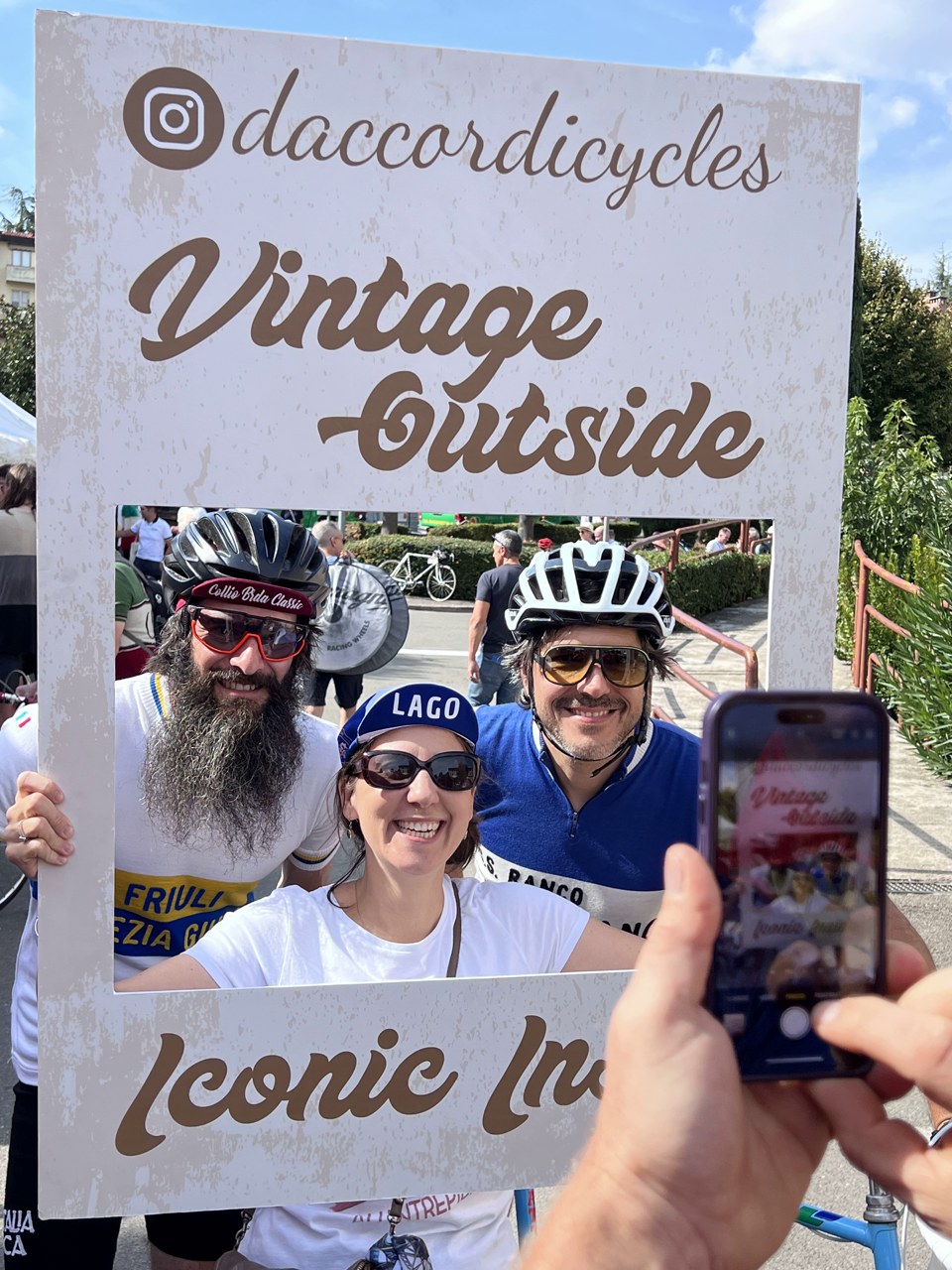
Carbon, steel and the freedom to choose
There was another aspect that we were particularly pleased to see. We met many cyclists who were willing to think about frame materials without starting from a predetermined answer. People considering their next bicycle did not simply assume that carbon had to be the obvious choice, but genuinely wanted to understand the advantages and disadvantages of carbon and steel in relation to the way they ride.
Again, we do not see this as some nostalgic return to the past. We work with carbon ourselves and know perfectly well what it can offer. What we find interesting is the willingness not to regard one material as inherently superior simply because that is how the story has been told for years. One cyclist may be looking for lightness, another for durability, another for comfort, handling, repairability or simply a particular feeling on the road. Depending on what you are looking for, the answer may be different.
We found the same attitude when talking about components. Not everyone seems to feel the need to have the latest model or the newest technical solution anymore. There seems to be a greater willingness to consider what works, what lasts and what is best suited to the way a bicycle will actually be used, even when that does not coincide with whatever the market happens to be pushing most strongly at the time.
Perhaps this was the broader impression we brought home from L’Eroica: a greater openness of mind. We did not meet cyclists who were against technology, carbon or modern bicycles. We met people who seemed less willing to automatically accept a hierarchy created by advertising, and more interested in forming their own opinions.
Perhaps the bike industry has simply pushed too far in recent years. Too many changes, too many standards, and too often the feeling that a perfectly good product needed to be replaced simply because something new had arrived. If that is the case, what we heard in Gaiole may be the first signs of a certain disillusionment with this cycle.
We do not know whether that is really happening and, above all, we do not know how representative the L’Eroica crowd is of cyclists in general. But we like the idea that some curiosity may be returning: the curiosity to judge a bicycle by what it genuinely offers, rather than by where it sits on the scale of what is newest.
A thought about L’Eroica itself
Precisely because we love L’Eroica and recognise the extraordinary value of what it has managed to create, we also want to share a less positive observation. For a few days, Gaiole becomes one of the centres of the cycling world, attracting people from many different countries and creating an atmosphere that very few other events can match. It is both understandable and right that an event of this scale should generate economic benefits for the local area.
This year, however, we saw — and were told about — very high prices for accommodation, food, parking and other services during the event. We are well aware that this happens around many major events, and there is nothing surprising about prices rising when demand increases. At the same time, we believe there is a point beyond which it can become counterproductive.
L’Eroica exists because of a wonderful idea, a unique landscape and an organisation that, over the years, has created something recognised throughout the world. But above all, it exists because thousands of cyclists continue to want to be part of it. They travel to get there, prepare their bicycles, pay their entry fees, book accommodation, eat locally and spend several days in the area. If that relationship is to continue for many years to come, we believe those people should feel welcomed and looked after, rather than simply being seen as an economic opportunity for a few days of the year.
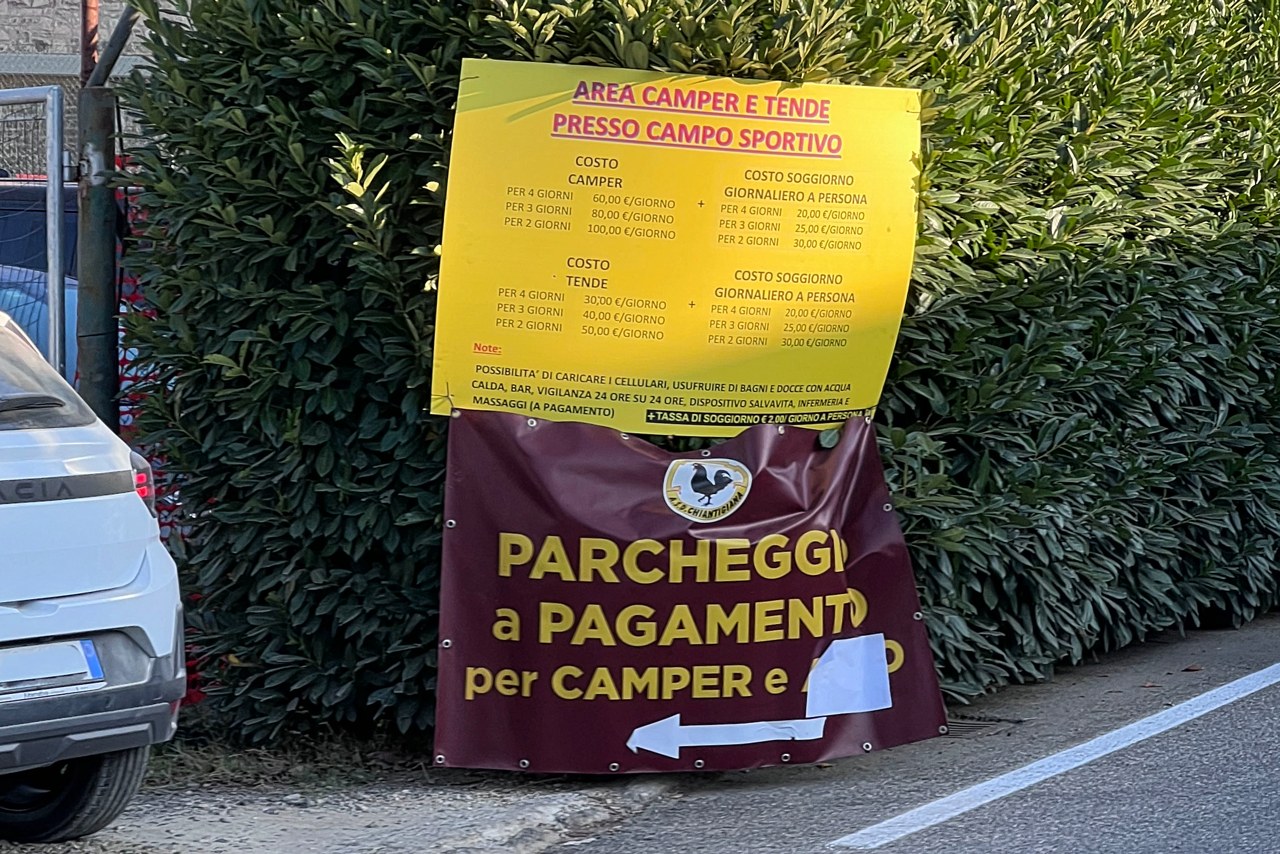
Perhaps it is interesting that this thought came up during a weekend in which we had already talked so much about the bike industry, because ultimately the underlying issue may be the same: how much can we ask of people’s passion before those who live that passion begin to feel they are being taken advantage of?
We came home from Gaiole with this question, along with all the others that emerged from the many conversations we had over those few days. We are not suggesting that what we heard represents the entire cycling world. In fact, that is precisely why we would like to continue the conversation.
What do you think? Do you also feel that you have become more critical of the constant stream of new products and technologies? When you choose a bicycle, does it matter to you where and how it was made? Are you still convinced that the latest technology is necessarily the best choice, or are you starting to look at materials and components more freely, judging them according to what you actually need?
Because, in the end, perhaps the most interesting question you left us with at L’Eroica is this: who should decide what kind of bicycle we need — the industry, or us cyclists?